Dr Phil Smith’s Wildlife Notes
JANUARY 2026
January was a very wet month for many but not for us! A succession of Atlantic systems, including three named storms, brought heavy rain to eastern, southern and southwest England, northeast Scotland and Northern Ireland. Some counties had their wettest January on record. However, Met Office maps show that, surprisingly, our region received average or below average rainfall. This is confirmed by Rachael Park’s garden data. She recorded measurable rain on 26 days but a monthly total of only 65 mm which is about 25% lower than average for Formby. Otherwise, the UK had slightly lower temperatures than the January normal and about average sunshine. The water-table at the Devil’s Hole, Ravenmeols, rose by a modest 8 mm during the month, resulting in extensive flooding of the deeper slack areas.
Often cloudy and damp conditions meant that I spent less time than usual outdoors and, when I did venture out, there wasn’t much to see in the way of wildlife. A typical January in fact. I spent a lot of time writing up observations made during the summer and circulating them. They included a scientific paper on a detailed study with four friends of the Baltic Rush at Birkdale, its only English locality. Comparing the results with several earlier surveys, we were able to show that this rare plant is rapidly declining, due to overgrowth of vegetation, including scrub, in its favoured wet-slack habitat. We suggested a few ways in which it might be conserved.
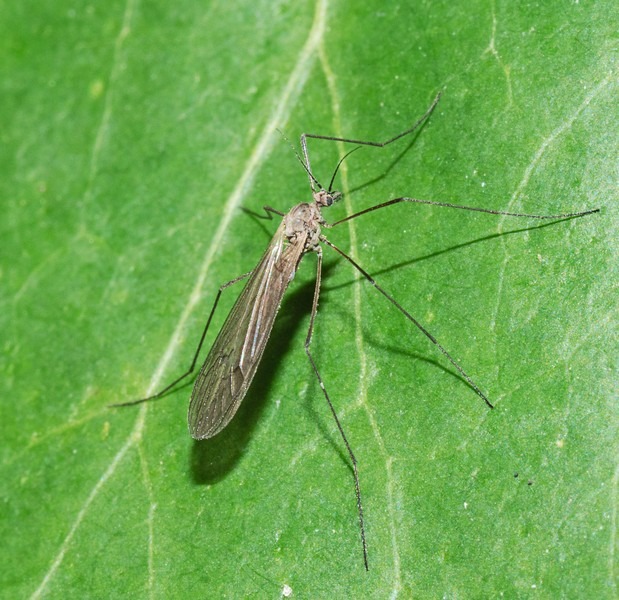
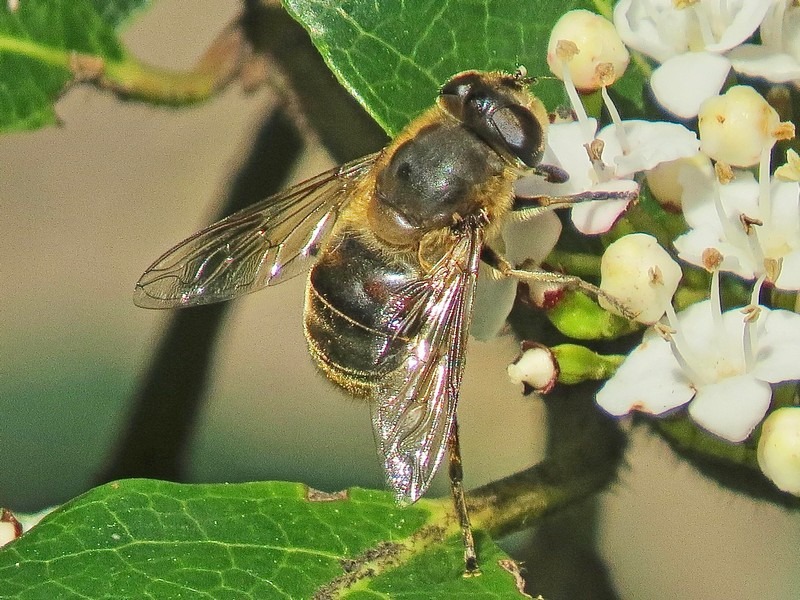
As expected, insects were thin on the ground. I had to be content with the occasional 7-spot Ladybird and a few Winter Gnats. Phil Brighton’s detailed check-lists tell us that as many as nine species of Winter Gnats have been recorded in the South Lancashire vice-county, Trichocera regalationis being the most frequent, though they are tricky to tell apart. Pete Kinsella assiduously searched the Crosby parks and finally, on 28th, came up with four kinds of hoverfly on flowering shrubs at Alexandra Park, including the Common Dronefly, a mimic of the Honeybee. Pretty good for January!
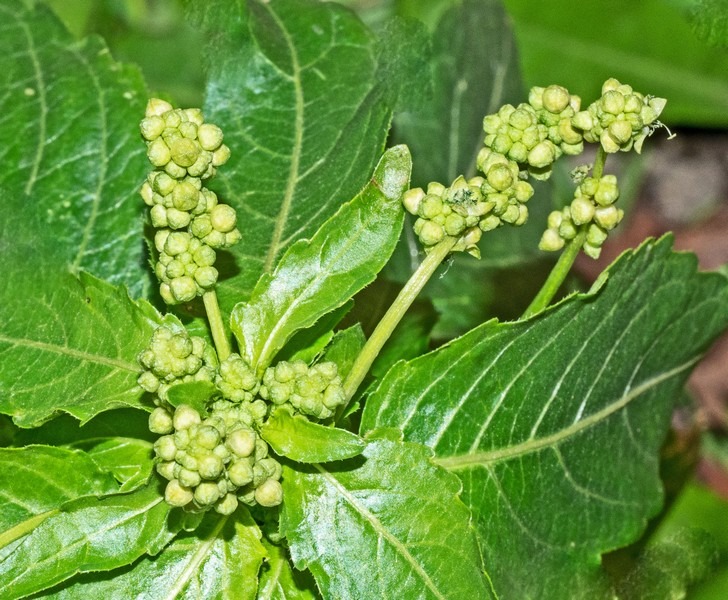
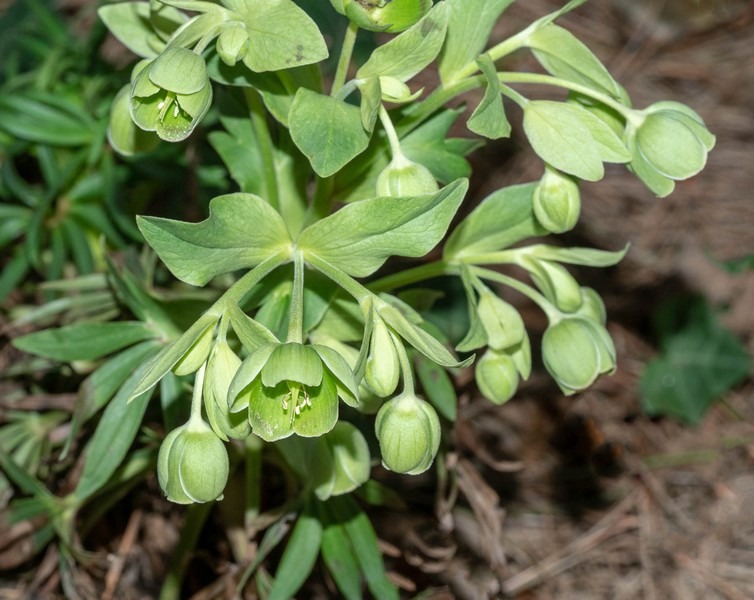
There are always a few wildflowers to be found in winter, a particular highlight being a single plant of Annual Mercury found by Steve Cross on disturbed ground at the edge of Kirklake Road, Formby. Back in November, I reported the surprising discovery of this regionally rare plant at Ainsdale, seemingly, the first record for our region since 1947. Growing with the Formby plant was the much commoner Sun Spurge and, just down the road at Church Green, two good-looking specimens of the winter-flowering Stinking Hellebore. Although it was new to me, this is a fairly widespread native plant on chalk and limestone soils but is also much grown in gardens, a likely origin of these individuals. Nearby was a huge fruiting bush of Bullate Cotoneaster, the largest of 19 different cotoneasters that have been recorded for the Sefton Coast, all of them garden-escapes. Wicks Path at Formby Point had flowering White Deadnettle, Gorse, Greater Periwinkle and Winter Jasmine. The damp mild conditions led to the first Snowdrops appearing in Formby by 19th. More surprising was Oxford Ragwort in flower at Marshside on 7th, while abundant white-flowered Shepherd’s-purse with a few Common Whitlowgrass at Southport Marine Lake on 27th hinted at spring just around the corner.Conditions in the dunes were also ideal for emerald-green carpets of mosses and liverworts, especially where the eight English Longhorn cattle had grazed down the thicker grass swards near the Devil’s Hole. They left behind plenty of evidence of their presence in the form of numerous droppings, many of which had been explored by birds searching for insects.
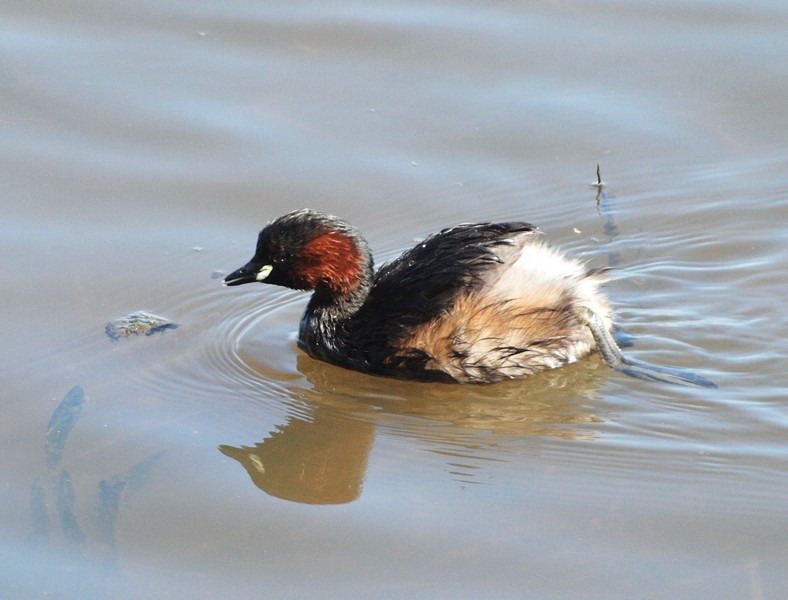
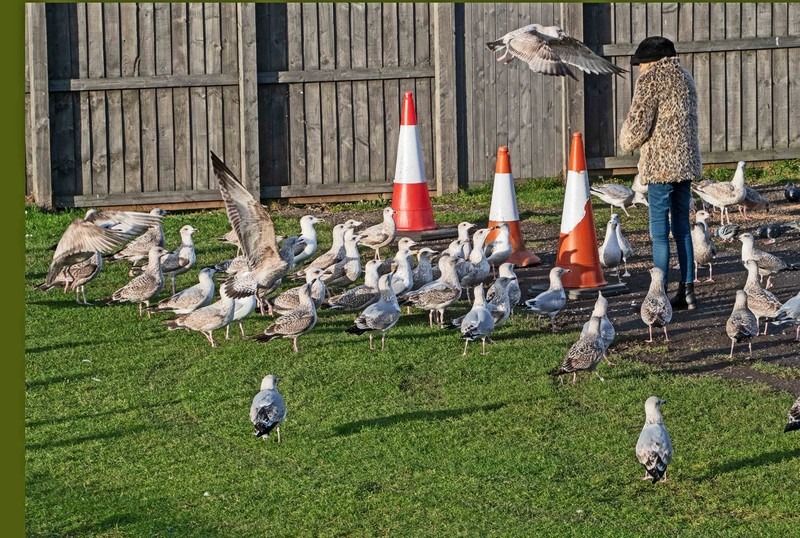
“Good” birds were thin on the ground during January. One of my best sightings was a Barn Owl hunting along a Plex Moss ditch right next to the car. Unfortunately, I struggled to get a decent photograph. Later in the month, the same place produced a Little Egret with mixed gulls and a flock of about 1000 Pink-footed Geese on a carrot field. Their musical “wink-wink” calls drifted towards me on the gentle breeze but they were too distant in the gloom to search successfully for other goose species. A visit to Marshside on 7th was enlivened by a Greater Snow-goose flying south with 10 feral Greylags. The general consensus is that the Snow-goose was probably an escape from a waterfowl collection. A quick look on Southport Marine Lake failed to locate the long-staying Smew but 11 Little Grebes provided some compensation. About 150 noisy Herring Gulls, mostly immatures in first and second winter plumage, were taking advantage of food handouts.
Finally, our hardy Buckthorn Bashers met three times during January, the third event attracted a record-equalling 20 participants, including several welcome new recruits.